Des Moines & Polk County, Iowa
Foundation Repair for Des Moines Homes Built on Glacial Till
Foundation repair in Des Moines usually starts with something small: a crack wandering through the mortar of a block basement wall, a puddle where floor meets wall after an April storm, a back door that drags. This page sorts those signs by cause and sets typical repair prices beside each one.
Most foundation repair in Des Moines falls into four jobs: bracing a cracked or bulging basement wall, piering a corner that has settled, keeping groundwater out, and lifting sunken slabs. Fixr's 2026 guide puts a typical project at $2,200–$8,200. One crack runs $200–$1,000, a waterproofing system $3,000–$10,000, and underpinning a full wall up to $40,000.
Older houses over deep basements
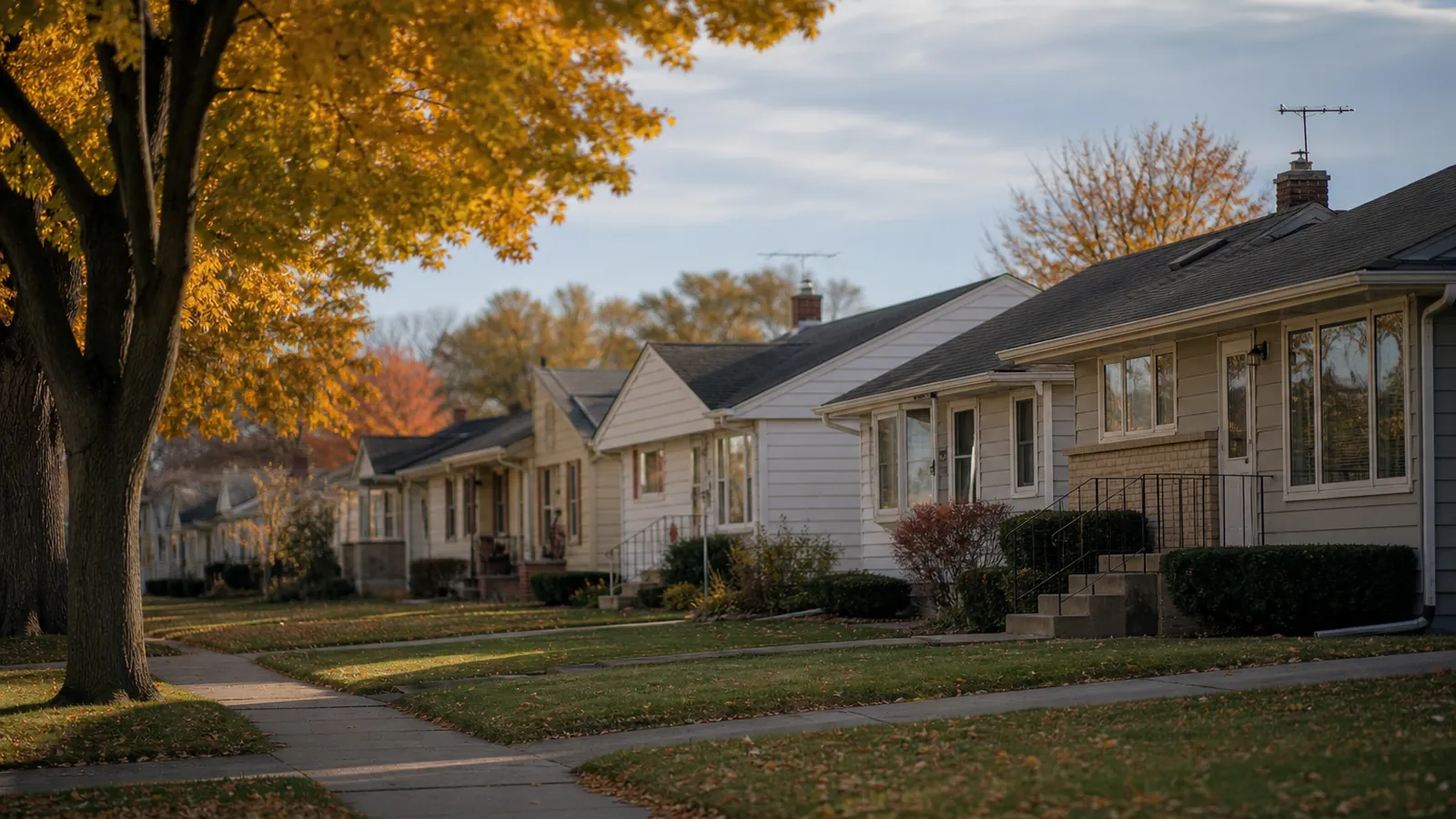
Des Moines is an old housing market. The median home in the city was built in 1961, about half of all units went up before 1960, and roughly 27% date from 1939 or earlier (U.S. Census ACS 2020–2024). Basements are the norm in Iowa: 68% of Iowa homes have one, according to the U.S. Energy Information Administration's 2024 housing survey.
Age matters because basement walls changed over the decades. A bungalow in Highland Park and a 1990s split-level may share a street grid but not a wall type: poured concrete, concrete block, or older clay tile, brick or stone. Each fails in its own way, so a useful first visit begins by noting what your wall is made of and how it has moved.
What does foundation repair in Des Moines usually involve?
- Walls pushed by soil. Stair-step or sideways cracks, a wall that leans in at the top, block that has slid at the base. See basement wall repair for cracks and bowing.
- Footings that sink. Sloping floors, doors that stop latching, diagonal cracks from window corners. Covered under settling foundations and piers.
- Water getting in. Seepage at the floor edge, a sump that never rests, damp block. The basement waterproofing page explains drain tile and pumps.
- Slabs that drop. A front stoop tipping toward the house or a driveway apron that has sunk. See concrete leveling.
Plenty of houses show two of these at once, and the order of repairs matters: drainage before wall bracing, foundation before the stoop.
Four kinds of foundation work
- Cracked, bulging or shifted basement wallsWhich cracks matter, and how strips, anchors and rebuilds hold a wall.
- Settling foundations and pier underpinningSloping floors, sticking doors, and how piers reach firmer ground.
- Basement waterproofing and sump systemsDrain tile, sump pumps, crack injection and outside fixes for a wet basement.
- Concrete leveling for sunken slabsMudjacking and foam lifting for steps, walks, drives, patios and garage floors.
- Des Moines foundation repair cost guide (2026)Published national ranges for walls, piers, waterproofing and slab lifting, each with its source.
Reading the signs and the ground
- Des Moines ground: glacial till, groundwater and floodsWhat the Iowa Geological Survey, the county soil survey and the river gauges say about your basement.
- What each foundation warning sign usually meansCracks, sticking doors, sloping floors, damp corners and sunken steps, answered one by one.
Groundwater sits close to the surface
The last glacier to reach Iowa, the Des Moines Lobe, stopped where the city now stands and left a thick blanket of till, a dense mix of clay, silt, sand and pebbles (Iowa Geological Survey). Till is the parent material for about 60% of the soil acreage in Polk County's soil survey. When the USDA Natural Resources Conservation Service rates those soils for houses with basements, about 56% of the rated acreage comes out very limited and 41% somewhat limited. The reason it gives most often is not slope or clay: it is a saturated zone close to the surface. The guide to Des Moines soil and floods goes through the numbers.
Spring loads the walls
Des Moines International Airport averages 36.55 inches of precipitation a year, and 22.5 inches of it falls from April through August, with May and June each averaging about 5.25 inches (NOAA 1991–2020 normals). Snowfall averages 36.5 inches, and the low drops to freezing or below on about 128 nights a year. Snowmelt over frozen ground, then the wettest weeks of the year, is when the soil beside a basement is heaviest and the water table highest. That is the time to walk the basement with a flashlight and check the floor edges and the crack marks.
How a request from this site works
Des Moines Foundation Pros is an independent local resource: it explains causes and published costs and does no repair work. A request sent here goes to one independent foundation specialist who works in Des Moines, who calls you, asks what you have found and sets up a visit.
Before you hire anyone, look them up. Iowa Code chapter 91C requires anyone earning $2,000 or more a year from construction to register with the Iowa Department of Inspections, Appeals, and Licensing, which offers a public contractor search. Get the method, the measurements and any warranty terms in writing.
Questions homeowners ask
How much should I budget for foundation work?
Fixr's 2026 guide puts most projects between $2,200 and $8,200, averaging about $5,200; This Old House reports a $5,179 average. Small crack work can stay under $1,000, while piering or underpinning a long wall can pass $10,000. The Des Moines foundation repair cost guide lists each job and its source.
Are houses near the Des Moines and Raccoon rivers at more risk?
Low ground near the rivers and creeks carries the flooding limits in the county soil survey. The Raccoon River at Fleur Drive crested at 26.8 feet on July 11, 1993, against a 12-foot flood stage, and the Des Moines River at SE 6th Street reached 35.55 feet on June 13, 2008 (NWS). Uphill, roof water and groundwater matter more.
Does Iowa's radon matter when the basement is repaired?
Yes. EPA places every Iowa county in Radon Zone 1, and Iowa's average indoor level is 8.5 pCi/L against 1.3 nationally (Iowa Department of Public Health). Radon enters through cracks, hollow block walls and gaps around sump pits, so test once wall or drainage work is finished.
Is the first visit free?
It depends on the company. Many local specialists don't charge for the first visit; ask when they call, before they come out.
Sources
- U.S. Census Bureau, American Community Survey 2020-2024: year structure built, Des Moines city
- U.S. Energy Information Administration, Residential Energy Consumption Survey 2024: structural characteristics by state
- Iowa Geological Survey: the Des Moines Lobe
- NOAA 1991-2020 U.S. Climate Normals (Des Moines International Airport)
- Iowa Department of Inspections, Appeals, and Licensing: contractor registration
Tell us what you're seeing at home
A line or two is enough: the crack, the damp spot or the sunken slab, and roughly where it is. One independent foundation specialist who works in Des Moines will call you to talk it through and arrange a visit.